
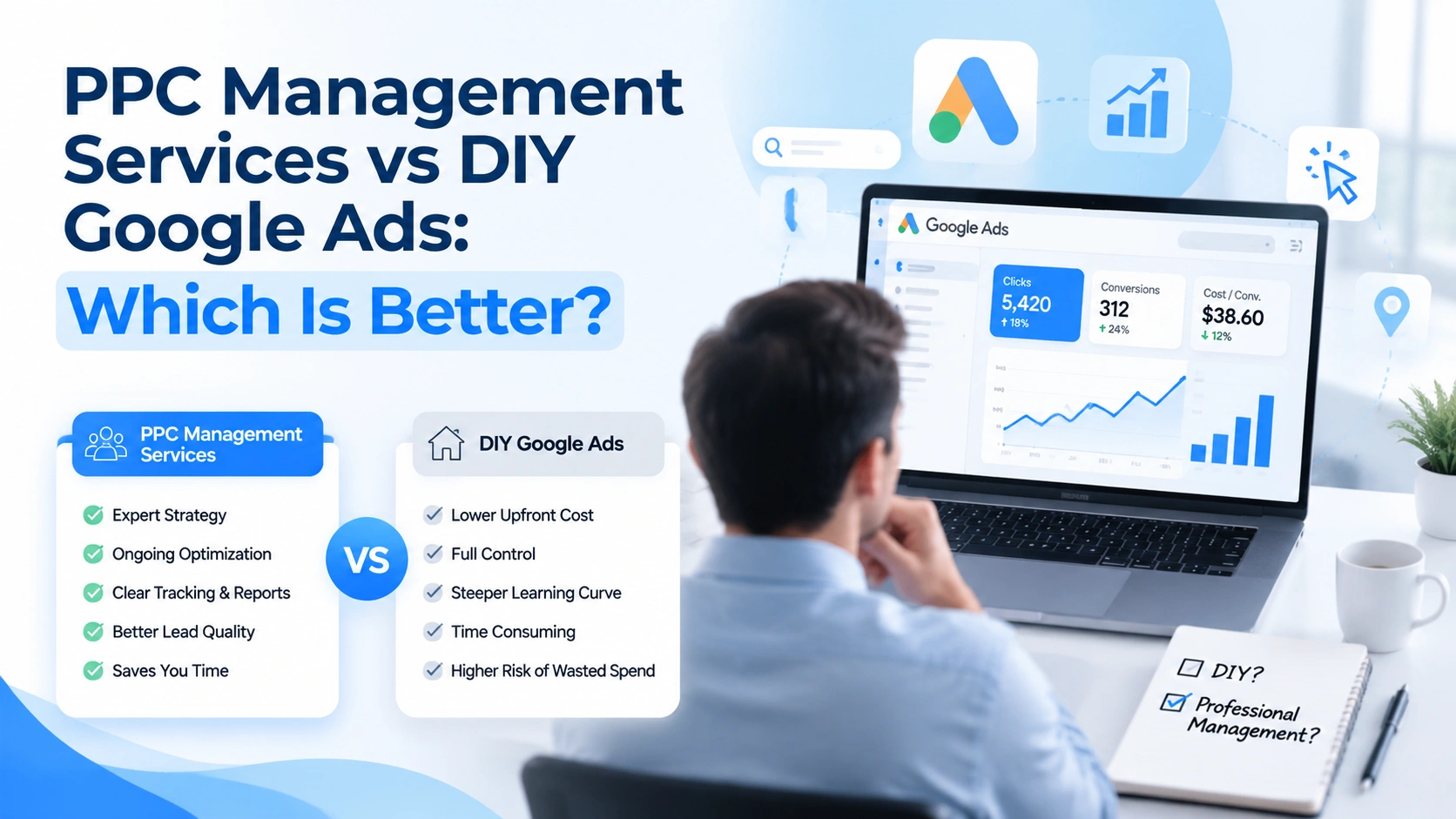
Running Google Ads looks simple until the clicks arrive but the leads do not. You set a daily budget, select a few keywords, and wait for calls or inquiries. Instead, your costs increase while the results remain unclear. This is where PPC management can help businesses gain better control over their advertising.
At Tech Support Plus IT Services Canada, we know paid advertising involves more than launching a few ads. It requires planning, accurate tracking, regular testing, and informed adjustments. The right choice between professional management and DIY Google Ads depends on your budget, available time, experience, and business goals.
What Is a PPC Service and How Does It Work?
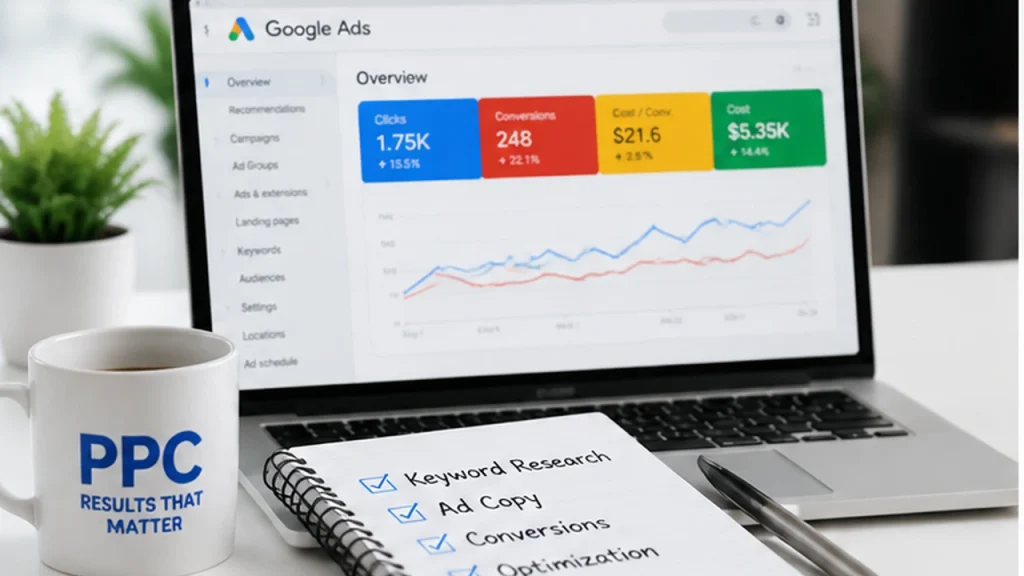
What is a PPC service? It is professional support for planning, launching, monitoring, and improving paid online advertising.
With pay-per-click advertising, a business pays when someone clicks an ad. The ad may appear on Google Search, partner websites, apps, or social media platforms. The goal should not be limited to generating website traffic. A strong strategy encourages valuable actions such as phone calls, bookings, purchases, and quote requests.
Most PPC ads services include:
- Keyword and competitor research
- Campaign setup
- Ad copy creation
- Audience and location targeting
- Bid and budget management
- Conversion tracking
- Testing and reporting
A PPC campaign should connect each ad to a relevant landing page and a clear next step. Without that connection, it is difficult to tell whether the advertising budget is producing meaningful results.
What Do PPC Management Include?
Professional management involves more than creating ads and checking the account occasionally.
1. Campaign Planning and Setup
Before launching ads, we identify what the business wants to achieve. Some companies want more calls, while others need purchases, appointments, or completed enquiry forms.
We study:
- The search terms customers use
- The services competitors advertise
- The locations the business serves
- The intent behind each keyword
- The available advertising budget
This research helps us create a clear account structure and reduce spending on searches that are unlikely to generate customers.
2. Ad and Landing Page Alignment
The message in an ad should match the page users see after clicking it.
For example, an ad promoting managed IT support should lead to a page that explains the service and provides an easy contact option. Sending visitors to a general homepage can create confusion and reduce inquiries.
We review the landing page message, loading speed, mobile experience, calls to action, and contact process. Even a well-written ad may struggle when the website is slow, unclear, or difficult to use.
3. Conversion Tracking
Clicks alone do not show whether advertising is helping the business grow. Conversion tracking identifies which ads lead to valuable customer actions.
Depending on the company, we may track:
- Phone calls
- Contact forms
- Online bookings
- Product purchases
- Downloads
- Other important actions
Accurate tracking shows which keywords, ads, and locations deserve more budget. It also helps us find areas that need improvement.
4. Ongoing Optimization
Paid advertising requires regular attention after launch.
We review search terms, add negative keywords, adjust bids, test ad messages, and compare performance across devices, locations, and times of day. We also check whether conversion tracking continues to work correctly.
These improvements help control costs and attract more relevant visitors.
When Is DIY Google Ads a Practical Option?
Managing Google Ads yourself can be reasonable when the campaign is simple and someone has time to monitor it.
DIY may suit your business when:
- You are promoting one clear service
- Your target area is limited
- Your test budget is controlled
- Conversion tracking is already working
- You can review the account regularly
- You are willing to learn through testing
Simple Google PPC campaigns can help business owners understand what customers search for and how they respond to different offers. However, the account still needs regular reviews. Leaving it untouched for several weeks may result in irrelevant clicks and unnecessary spending.
What Are the Risks of DIY Google Ads?
DIY advertising does not always produce poor results. The main risk is that small mistakes may continue using the budget before the business notices them.
Common problems include:
- Choosing keywords that are too broad
- Paying for searches unrelated to the service
- Forgetting to add negative keywords
- Sending traffic to a generic homepage
- Tracking clicks without tracking inquiries
- Accepting automated recommendations without reviewing them
- Running weak ads for too long
- Making decisions without enough data
Time is another challenge. Business owners may plan to check the account regularly, but daily responsibilities often take priority. When campaigns are not monitored, increasing costs and declining lead quality can go unnoticed.
Professional Management vs DIY Google Ads
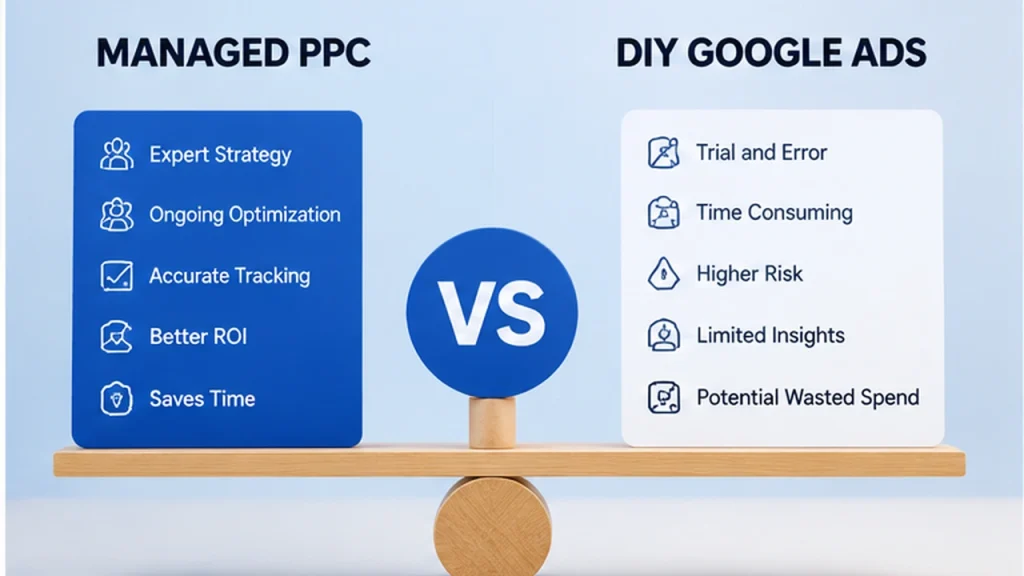
The better option depends on your resources and campaign complexity.
Cost
DIY avoids a management fee, but the business still pays the advertising budget. Professional management adds a separate cost for planning, setup, monitoring, testing, and reporting.
The cheapest approach is not always the best value. The more important question is whether the full investment produces qualified customer actions.
Time
DIY requires someone within the business to learn the platform and monitor performance. Professional management allows the owner and internal team to focus on customers and operations while specialists manage the account.
Knowledge
Google Ads includes many settings that influence performance. Keyword match types, bidding strategies, locations, audiences, schedules, and conversion settings all require careful decisions.
Professional support gives the business access to people who understand these areas and know what to review.
Tracking and Reporting
DIY users must configure and check tracking themselves. A professional team should connect advertising costs with actual calls, leads, sales, or bookings.
Clear reporting helps businesses understand what is working instead of focusing only on clicks and impressions.
Scalability
DIY may work for one service in a small area. Professional management becomes more valuable when the account covers several services, cities, audiences, or advertising platforms.
Should You Use Google Ads, Meta Ads, or Both?
Google Ads reaches people who are actively searching for a product, service, or solution. This makes it useful for capturing existing demand.
Meta advertising helps businesses reach people based on interests, demographics, behaviour, and previous engagement. Companies using meta ads management services may use the platform to build awareness or reconnect with people who previously visited their website.
Some businesses benefit from combining both channels. Google can reach high-intent searchers, while Meta can support awareness and remarketing. The right platform depends on the audience, offer, buying process, and campaign objective.
How Paid Advertising Supports a Wider Marketing Strategy
Paid advertising works best when it connects with the rest of your online presence.
SEO service providers focus on improving long-term organic visibility, while paid advertising can bring targeted visitors to a website sooner. PPC does not directly improve organic rankings, but it can provide useful information about customer searches, offers, and landing pages.
Insights from PPC management can reveal which keywords and messages generate meaningful customer actions.
Businesses comparing digital marketing services in Canada should consider whether the provider understands how paid advertising, SEO, website performance, analytics, and conversion tracking work together. A connected strategy creates a clearer customer journey and makes results easier to measure.
Which Option Is Better for Your Canadian Business?
Choose DIY Google Ads when:
- Your campaign is simple
- Your budget is controlled
- Tracking is already installed
- Someone can review performance regularly
- You are prepared to test and learn
Choose professional PPC management when:
- Advertising costs are increasing
- Lead quality is inconsistent
- You promote several services or locations
- Advanced tracking is required
- Your team lacks internal experience
- Your reports do not clearly show what generates customers
Professional support is often more practical when advertising mistakes are becoming costly or the account has grown beyond what the internal team can confidently manage.
Work With Tech Support Plus IT Services Canada
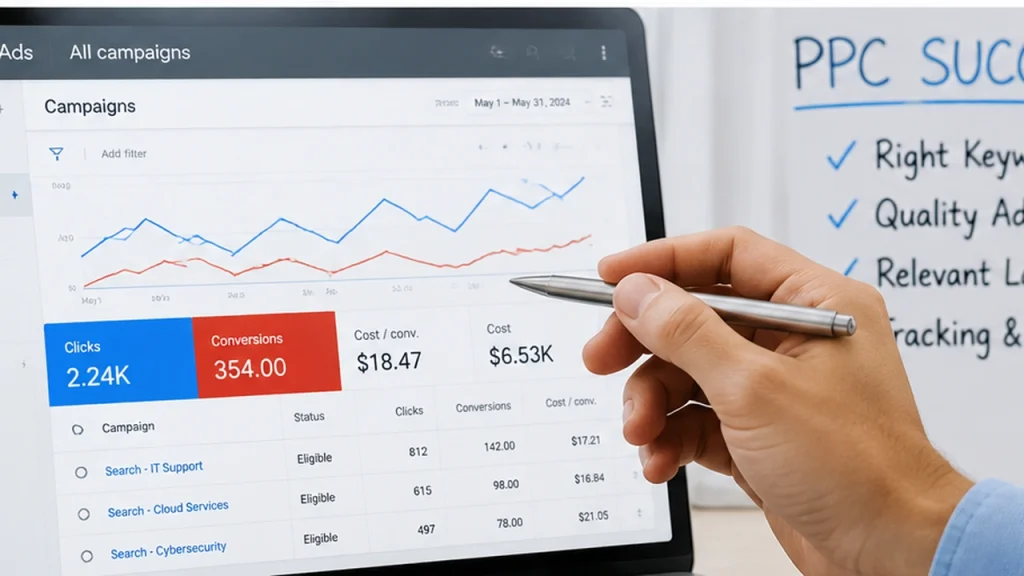
At Tech Support Plus IT Services Canada, we build paid advertising strategies around clear business goals and measurable customer actions.
Our team connects advertising with website performance, analytics, conversion tracking, and organic search. We review account data, explain what the numbers mean, and make informed adjustments based on actual results.
We do not focus only on increasing clicks. Our goal is to help Canadian businesses attract relevant visitors and create stronger opportunities for inquiries and growth.
DIY Google Ads may work for a simple campaign with a controlled budget and someone available to manage it. Professional support becomes more valuable when the account requires regular testing, accurate tracking, and ongoing improvements.
Contact Tech Support Plus IT Services Canada to discuss your advertising goals and determine which approach is better suited to your business.