
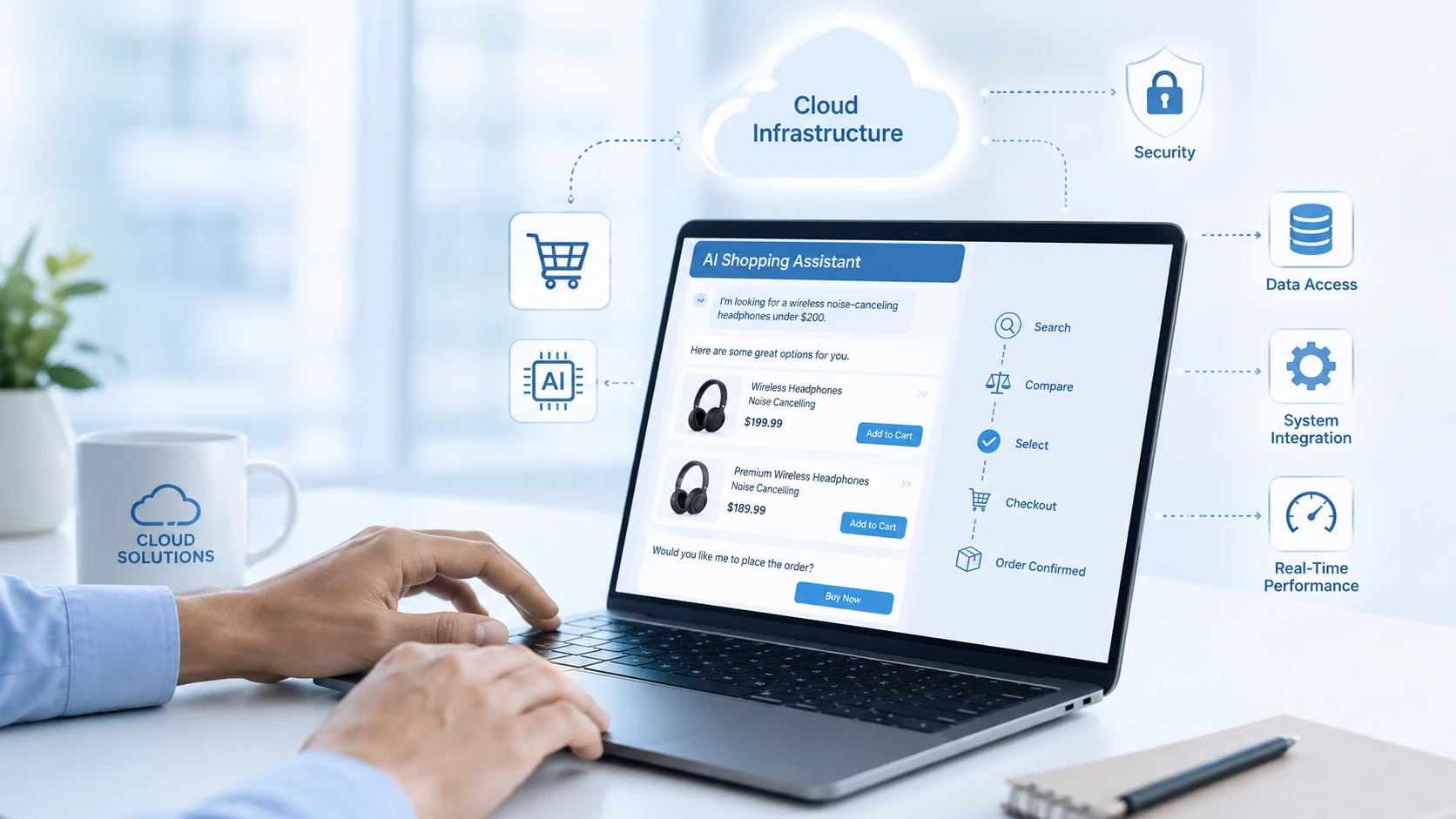
AI is starting to play a bigger role in how people shop online. It can already help users compare products, narrow down choices, and find relevant options faster. The next step is more significant: AI systems are beginning to move closer to completing transactions.
For Canadian cloud providers, that could create new demands around speed, data access, security, and system integration. If AI agents are expected to check inventory, compare prices, communicate with merchant platforms, and eventually support purchases, the infrastructure behind those actions needs to respond reliably.
Google’s Universal Commerce Protocol, or UCP, shows where this could be heading. It is designed to help AI shopping agents connect with merchant systems across discovery, cart building, checkout, and post-purchase activity.
For businesses, the question is no longer just whether AI will influence online shopping. It’s whether their cloud infrastructure can keep up with how quickly that shopping experience is changing.
Canadian Cloud Providers Are Facing a New Kind of Online Customer
Traditional e-commerce was built for people clicking through websites.
AI shopping changes that.
Instead of manually opening several stores, checking prices, comparing availability, and building a cart, an AI agent could help handle much of that process through connected merchant systems.
That means Canadian cloud providers may eventually be supporting more than ordinary page visits. Systems could be receiving automated requests for:
- Current prices
- Inventory levels
- Delivery options
- Product details
- Payment capabilities
- Order information
The cloud is no longer just sitting behind the website. It may become part of the actual conversation between AI and the business.
AI Is Moving From Product Search to Actual Purchases
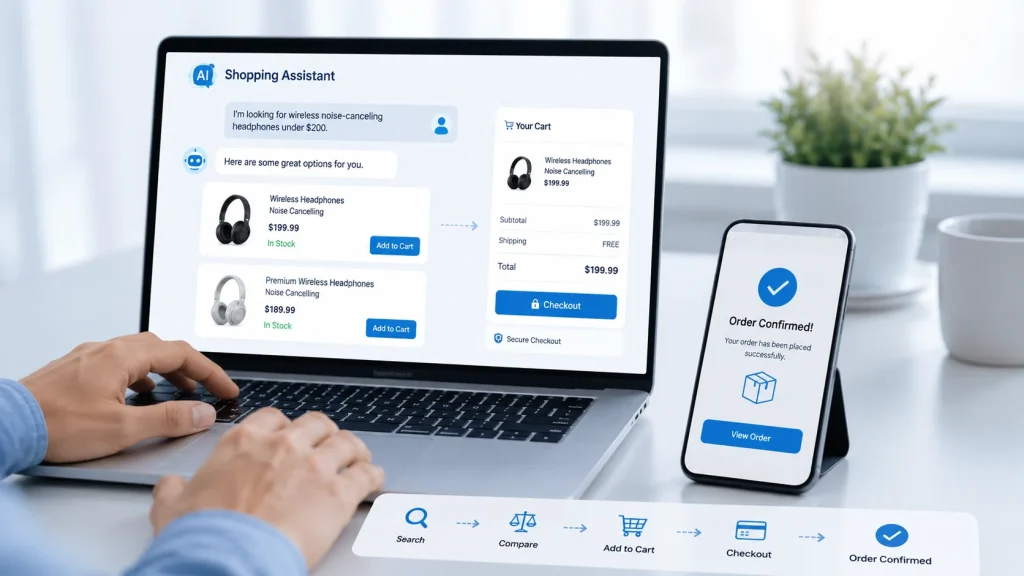
We’ve already seen AI become part of product discovery. Ask an AI assistant for recommendations, and it can compare options in seconds.
The next step is much more interesting.
Google’s UCP is designed to help AI experiences move further into the buying process. Instead of simply telling a customer what to buy, an AI system could potentially help build the cart and move the transaction forward.
That could shorten the customer journey dramatically.
For cloud service providers, the challenge is obvious. Automated shopping systems won’t want to wait around for stale inventory data or slow responses. They need accurate information when they ask for it.
If your backend says an item is available when it sold out ten minutes ago, that’s no longer just an inconvenience. It could interrupt an automated purchase completely.
Canadian Cloud Providers May Need to Handle More Real-Time Data
AI shopping works best when the information behind it is fresh.
Prices change. Products sell out. Delivery times shift. Payment options vary. Promotions expire.
An AI agent making decisions on behalf of a shopper needs access to that information quickly.
This could put more pressure on Canadian cloud providers to support systems that keep e-commerce platforms, inventory tools, payment systems, and customer data connected.
For businesses still relying on older or disconnected infrastructure, this may expose weaknesses that weren’t as obvious before.
That is where cloud migration solutions can become important. Moving away from fragmented legacy systems can help businesses create a more connected environment where information is easier to update and share.
You don’t need to rebuild everything because AI shopping exists. But if your systems already struggle to keep basic information synchronized, AI won’t make that problem disappear.
Security Gets More Complicated When AI Can Complete Transactions
There’s a big difference between allowing AI to recommend a product and allowing it to interact with a transaction.
Once automated systems can access account information, payment processes, inventory, or customer data, security becomes much more serious.
Businesses need to know:
- Who is requesting access?
- What can that system see?
- What actions can it perform?
- How is the transaction verified?
- What happens when something looks suspicious?
- Who takes over when human confirmation is needed?
This is where convenience has to meet control.
For Canadian businesses, secure cloud storage in Canada may also become part of the conversation when sensitive customer and transaction information is involved.
AI may make shopping easier, but businesses still need to know exactly what is happening behind the scenes.
Why Businesses May Need to Rethink Their Cloud Infrastructure
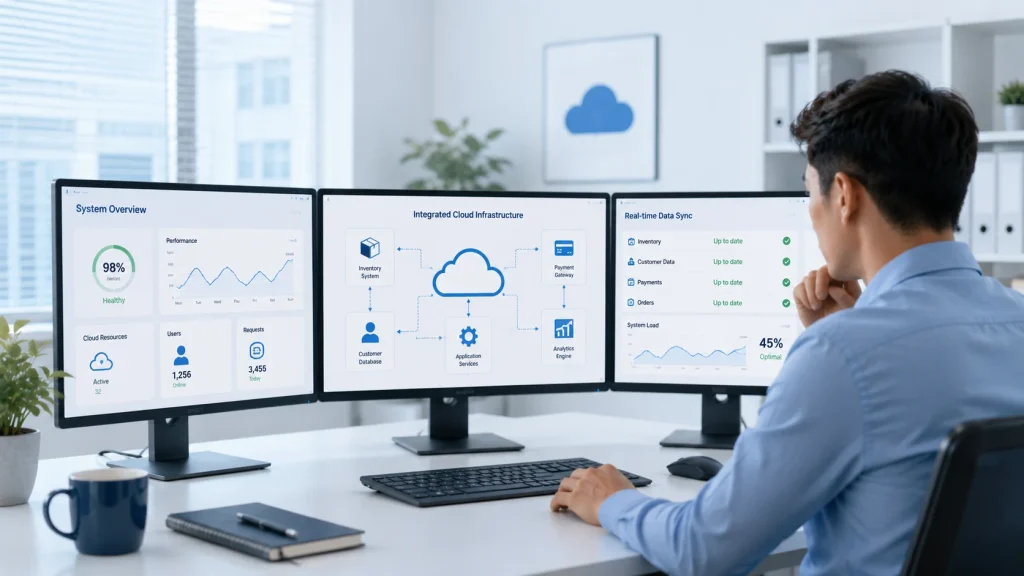
Here’s the bigger point: AI shopping doesn’t only change the storefront.
It changes what has to happen behind it.
Your website might look perfectly modern while the systems underneath it are struggling to communicate. Inventory lives in one platform, customer information in another, payments somewhere else, and updates take too long to move between them.
That setup becomes harder to ignore when AI expects immediate answers.
Businesses should start asking:
- Can our systems provide accurate information quickly?
- Can our platforms communicate without constant manual work?
- Can we handle more automated requests?
- Do we know who can access our data?
- Can the infrastructure scale without becoming unstable?
At Tech Support Plus IT Services Canada, this is where cloud strategy becomes less about simply “moving to the cloud” and more about making sure the cloud actually supports how the business needs to operate.
What Canadian Cloud Providers Should Prepare for Next
Nobody needs to panic because AI can shop.
But ignoring the direction of travel isn’t a great strategy either.
Google’s UCP shows that AI-powered commerce is moving beyond recommendations and toward deeper interaction with merchant systems. As that develops, Canadian cloud providers may need to support infrastructure that is faster, more connected, more secure, and better prepared for automated activity.
Businesses don’t need every answer today.
They do need infrastructure that won’t become the bottleneck tomorrow.
Tech Support Plus IT Services Canada can help businesses assess their current cloud environment, identify weak points, and prepare for a future where customers may increasingly rely on AI to search, compare, and eventually buy.
Because when AI becomes part of the checkout process, the businesses that respond fastest may be the ones whose systems were ready before the customer even asked.