
Paid advertising is getting easier to automate but harder to manage well. Platforms are adding more AI, more creative tools, and more ways for people to interact with ads. That sounds convenient, but it also means a PPC specialist has more decisions to make about creative quality, lead handling, campaign goals, and where each platform fits in the customer journey.
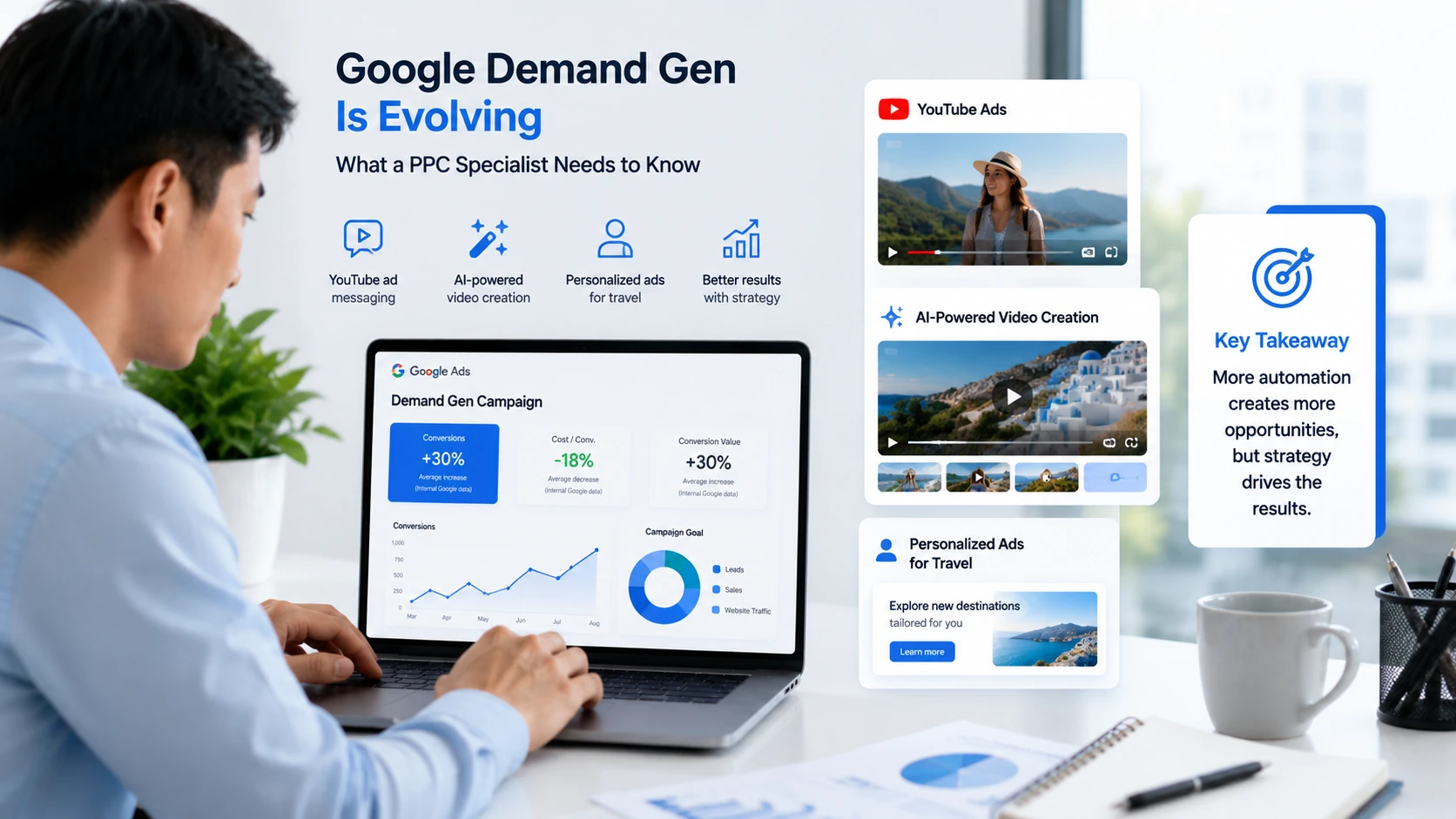
Google’s August 2026 Demand Gen update adds messaging from YouTube ads, broader AI-powered video creation, and new personalized advertising options for travel businesses. Google also reported that Demand Gen improvements introduced in the second half of 2025 produced an average 30% increase in conversions or conversion value in its internal experiments.
The bigger takeaway is simple. More automation creates more opportunities, but it doesn’t remove the need for strategy.
What’s New in Google Demand Gen?
Demand Gen is becoming more interactive and more creative-focused.
One of the biggest changes is the ability for users to start conversations with businesses directly from certain YouTube Demand Gen ads. That can shorten the path between seeing an ad and actually talking to a brand.
The update also gives advertisers wider access to AI-assisted video creation, making it easier to produce horizontal and vertical assets for different placements. For travel advertisers, personalized options can also surface relevant hotels, local activities, and offers.
For a digital marketing agency in Canada, these changes create more ways to connect paid ads with the rest of the customer journey instead of treating each ad as a separate touchpoint.
How a PPC Specialist Can Use Messaging More Effectively

Messaging can reduce friction, especially for businesses where customers normally need to fill out a form, visit a contact page, or wait for a response.
A PPC specialist should look beyond the click and think about what happens after the conversation begins.
That means asking:
- Who will answer incoming messages?
- How quickly can the business respond?
- What questions are likely to come up?
- How will those conversations be tracked as leads?
This is where PPC management services become more important. Getting someone to start a conversation is useful, but the campaign still needs a clear process for qualifying that person and moving them closer to a sale.
A faster conversion path only works if the business is ready to handle it.
AI Video Is Changing the Creative Process
Creative production has always been one of the slower parts of paid advertising. A business may know it needs more video variations, but production time and cost can limit how much testing is possible.
AI-assisted video tools can change that.
Advertisers can create more versions for different formats, test new ideas faster, and adapt existing creative for multiple placements. That gives businesses using PPC ads services more room to experiment without needing a full production process for every variation.
But speed shouldn’t replace quality.
AI-generated assets still need human review. Tone, visual consistency, product claims, captions, and overall brand fit all matter. Creating ten videos quickly isn’t automatically better than producing three strong ones.
The real advantage is faster testing, not unlimited content.
Why a PPC Specialist Still Needs Strong Campaign Judgment

Automation can handle more campaign tasks, but it still needs direction.
A PPC specialist decides what the campaign is actually trying to achieve, which audiences matter most, how much budget should be allocated, and when a creative or targeting approach is no longer working.
This matters especially with Google PPC campaigns because strong performance isn’t just about impressions or clicks.
A specialist still needs to evaluate:
- Cost per lead or sale
- Conversion quality
- Budget efficiency
- Creative performance
- Audience behavior
- Revenue or business value
Automation can optimize toward the signals it receives. Human judgment determines whether those signals actually represent the right business outcome.
At Tech Support Plus IT Services Canada, we treat paid advertising as an ongoing strategy rather than a set-and-forget system. The tools may become smarter, but the decisions behind them still matter.
Demand Gen Is Blending Search and Social Advertising
Paid advertising channels are starting to overlap more.
Search ads traditionally focus on people actively looking for a solution. Social ads often reach people earlier, when they’re discovering brands, products, or ideas. Demand Gen combines parts of both approaches by using visual placements, Google audience signals, and YouTube behavior.
That creates a broader role for campaign planning.
A Meta ads strategy, for example, can support awareness and engagement while Demand Gen reaches similar audiences through Google-owned platforms. Search campaigns can then capture people showing stronger intent.
The goal isn’t to run ads everywhere.
The goal is to understand what each channel is supposed to do and how they work together. When platforms overlap, campaign roles need to become clearer, not more confusing.
What Every PPC Specialist Should Do Next
The first move shouldn’t be to activate every new feature.
A PPC specialist should start by looking at existing campaigns and identifying where the new Demand Gen capabilities could solve a real problem.
Messaging may make sense if leads often need to ask questions before converting. AI video may help if creative production is slowing down testing. Demand Gen itself may deserve more attention if the business needs to reach people before they actively search.
The practical approach is straightforward:
- Start with one clear goal
- Test one meaningful change at a time
- Track lead and conversion quality
- Compare results with existing campaigns
- Scale only when the data supports it
New tools can make advertising faster, but faster isn’t always smarter.
Tech Support Plus IT Services Canada helps businesses connect campaign strategy, creative testing, conversion paths, and broader digital marketing into one clearer approach. As Demand Gen continues to evolve, the strongest results will come from businesses that use new tools with purpose instead of simply using them because they’re available.