
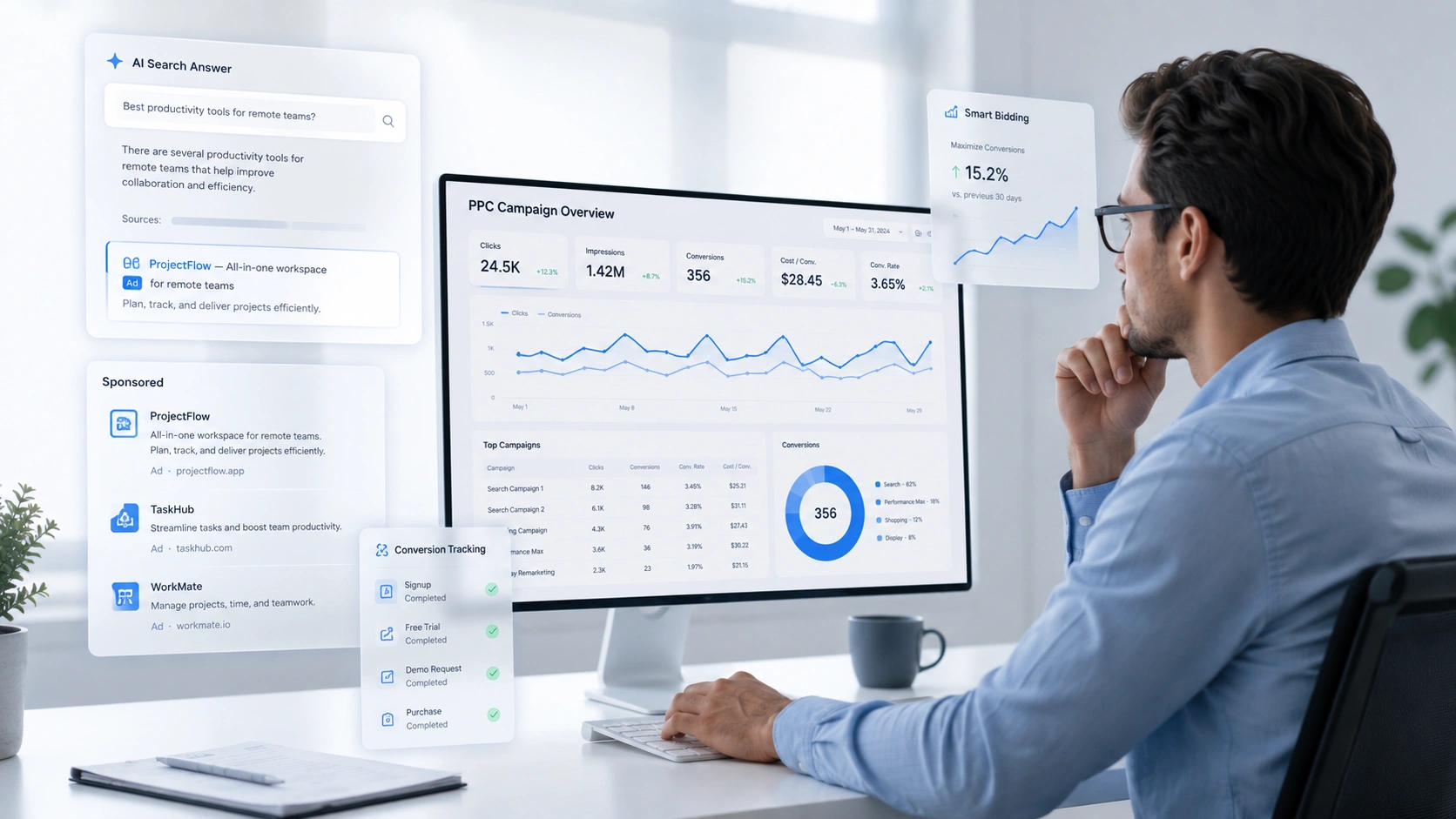
Pay Per Click ads services are becoming more important as Google continues to expand advertising inside AI-powered search experiences. For many business owners, paid ads already feel difficult to manage because costs, keywords, targeting, and conversions can shift quickly. Now, with new ad placements appearing inside AI Mode, advertisers may need to rethink how they show up when people search, compare, and make buying decisions.
Google’s latest move shows that search ads are no longer limited to the familiar results page. Ads may now appear closer to AI-generated answers, product recommendations, and conversational search journeys. This matters because users are not only typing short keywords anymore. They are asking longer questions, comparing options, and expecting direct answers before they click.
For brands that rely on paid search, this is not something to ignore. It is a sign that ad strategy needs to become more helpful, more relevant, and more connected to user intent.
What Google’s New AI Ad Placements Mean
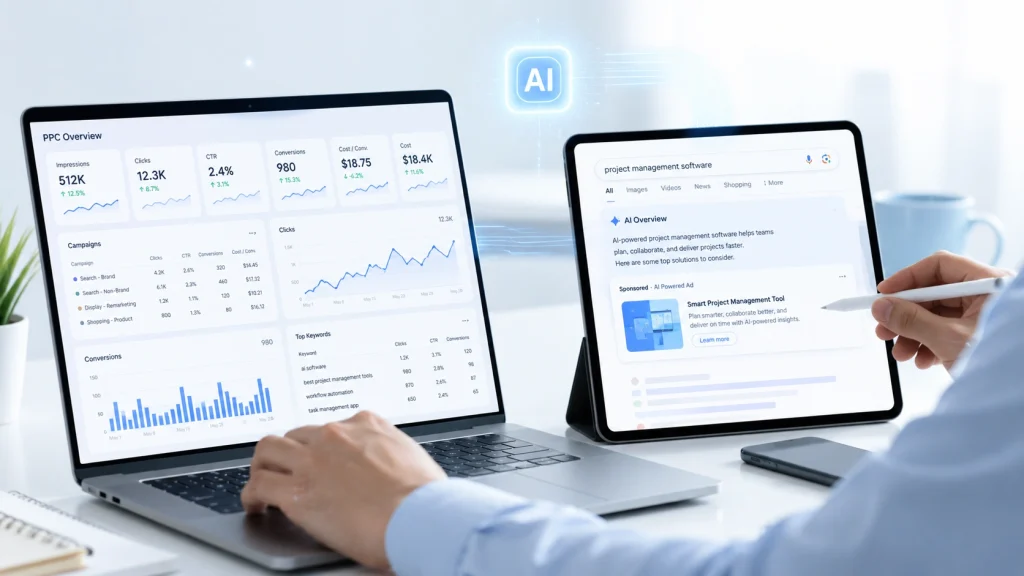
Google’s AI Mode is designed to make search feel more conversational. Instead of showing only traditional blue links and standard ads, the experience can guide users through answers, recommendations, and follow-up questions.
The new ad formats may allow sponsored results to appear inside these AI-driven moments. This means advertisers could reach users while they are still exploring their options, not only when they are ready to buy.
For example, a person may ask for product ideas, service comparisons, or recommendations based on a specific need. Instead of waiting for a normal search ad slot, a relevant sponsored result may appear inside the AI response flow.
This creates new opportunities, but it also adds new pressure. Ads need to feel useful, timely, and connected to the user’s question.
What is a PPC service?
A PPC service helps businesses plan, launch, manage, and improve paid advertising campaigns. This usually includes keyword research, ad copywriting, audience targeting, bid management, landing page review, tracking setup, and regular performance optimization.
In simple terms, it helps businesses avoid wasting ad spend. A good paid ads strategy is not just about getting clicks. It is about reaching the right people, giving them the right message, and guiding them to take action.
With Google’s AI ad placements, this type of support becomes even more valuable. Advertisers may need to understand not only which keywords perform well, but also what questions customers are asking and what type of content helps them decide.
Why Pay Per Click Ads in Canada Now Need a Smarter Approach
AI-powered search changes how people interact with ads. Users may spend more time inside search results before visiting a website. They may compare brands directly in the AI experience. They may also expect ads to answer their needs more clearly.
This means businesses should focus on three important areas:
- Stronger ad messaging: Your ad should not only promote a product or service. It should clearly explain why the offer is useful and relevant.
- Better landing pages: If users click from an AI-powered result, they expect the page to match their intent. Slow, confusing, or generic landing pages can lose conversions fast.
- Clearer tracking: As search journeys become more complex, businesses need accurate tracking to understand what is working and what needs improvement.
A basic setup may no longer be enough. Advertisers need a strategy that can adjust as Google changes the way paid results appear.
Review Your Canada PPC Campaign Before Bigger Changes Arrive

Businesses should not wait until performance drops before making improvements. This is the right time to review existing paid ads and check whether they are ready for a more AI-driven search environment.
Start by asking these questions:
- Does the ad copy answer real customer problems?
- Does the landing page clearly explain the offer?
- Are conversion actions properly tracked?
- Are search terms reviewed regularly?
- Are campaigns built around intent, not only keywords?
- Is the budget going to the best-performing audiences and locations?
These simple checks can reveal weak points before they become expensive problems.
How Google PPC Campaigns May Change for Advertisers
The biggest change is that paid search may become less linear. In the past, users often searched for a keyword, saw an ad, clicked, and visited a website. Now, users may ask more detailed questions and receive AI-powered suggestions before making a decision.
This means advertisers need to think beyond the click. They need to consider visibility, relevance, trust, and content quality.
Brands with clear messaging, helpful landing pages, and strong conversion signals may be better prepared. Brands that rely on generic ads may struggle to stand out in a more conversational search experience.
What Businesses Should Do Next
Google’s new AI ad placements are a reminder that paid search is still evolving. Businesses should not panic, but they should prepare.
Here are practical next steps:
- Update ad copy to match customer questions.
- Improve landing pages with clearer benefits and calls to action.
- Review conversion tracking and reporting.
- Test different headlines and offers.
- Monitor changes in impressions, clicks, and leads.
- Work with experienced marketers who understand paid search changes.
The goal is not only to appear in new placements. The goal is to appear with the right message at the right moment.
Future of PPC Management in an AI-Driven Advertising Landscape

Google’s AI Mode ad placements show that paid advertising is moving into a new phase. Search is becoming more conversational, and ads may appear closer to the answers and recommendations users trust.
For business owners, this means strategy matters more than ever. Strong targeting, useful messaging, optimized landing pages, and accurate tracking can help brands stay competitive as Google changes the search experience.
If your business wants to prepare for these changes, Tech Support Plus IT Services Canada can help you build a smarter paid advertising strategy. As a digital marketing agency in Canada, the team can support your ads, improve campaign performance, and help your brand stay visible in today’s evolving search landscape.