
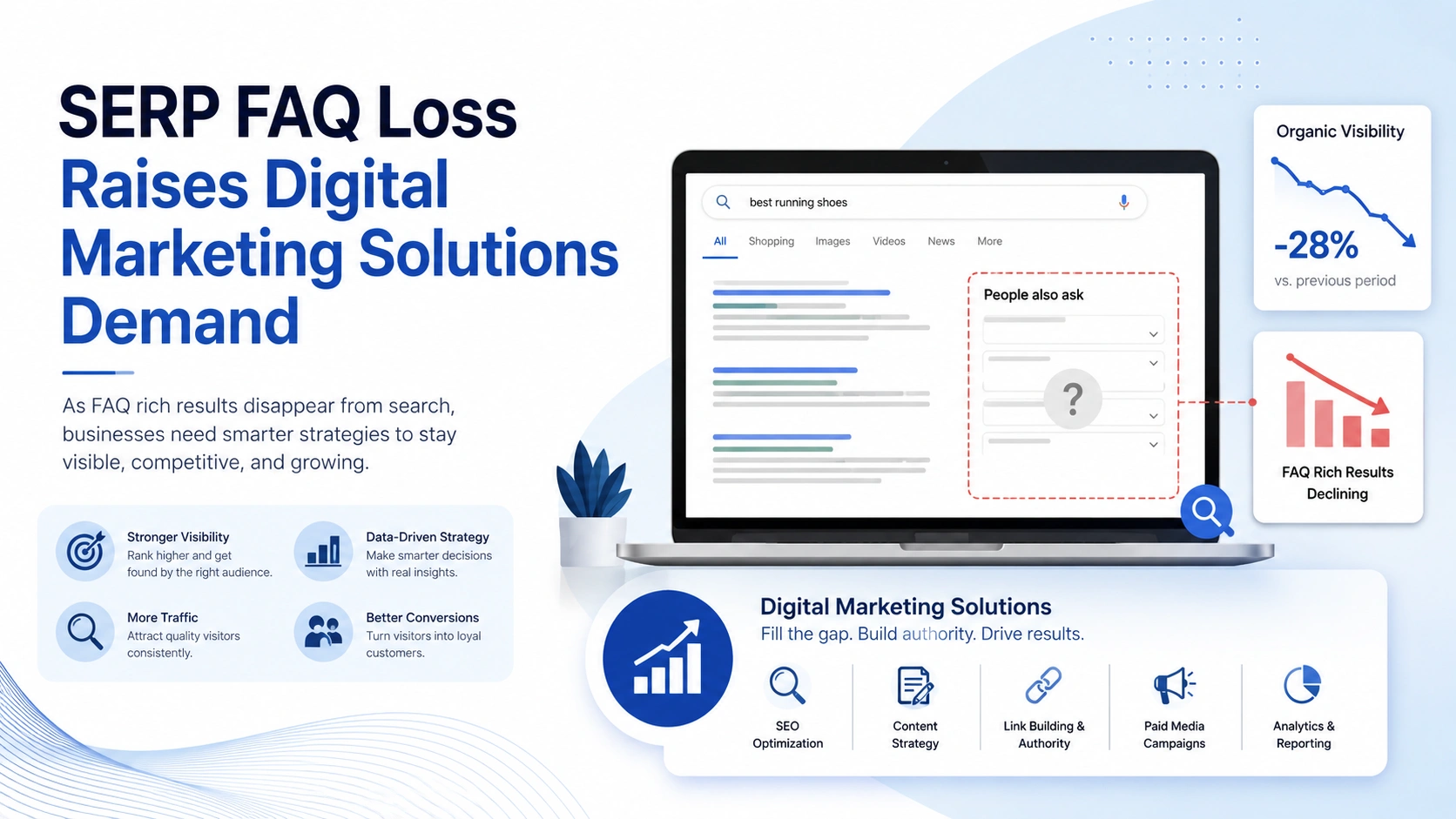
Digital marketing solutions for business are becoming more important as Google changes how search results appear, especially after the loss of FAQ rich results. Have you noticed that some pages no longer get the same attention in search even when the content is still helpful?
This is the real concern for many business owners, marketers, and website managers today. You may have invested time in FAQ sections, schema markup, and SEO improvements, but the search page keeps changing.
For years, FAQ schema gave many websites a chance to take up more space in Google results. It helped pages look more useful before users even clicked. Now that this visibility is going away, businesses need to rethink how they earn attention, trust, and traffic.
This does not mean structured data has no value. It means businesses should stop treating schema as a shortcut. Search is moving toward stronger content quality, clearer page structure, and better user experience. Google has stated that FAQ rich results are no longer appearing in Search as of May 7, 2026, with related reporting and testing support being phased out after that.
What Happened to FAQ Rich Results?
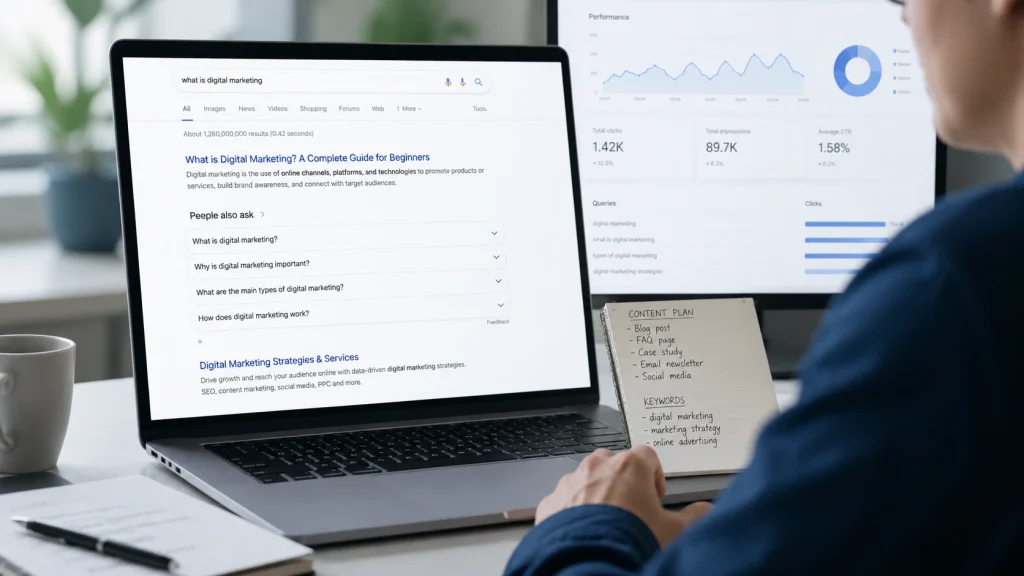
FAQ rich results were once a popular SEO feature. Website owners could add FAQ schema to a page, and Google could show questions and answers directly in the search results. This helped pages appear larger and more useful.
However, Google has been reducing the visibility of some structured data features over time. In 2023, Google limited FAQ rich results mainly to authoritative government and health websites. In 2026, Google’s FAQ documentation said FAQ rich results were no longer appearing in Google Search.
This update matters because many businesses used FAQ schema as part of their visibility strategy. They expected it to improve click-through rates, search appearance, and sometimes even AI search performance. Now, the benefit is not as clear as before.
Why Digital Marketing Solutions for Business Demand Is Rising
The loss of FAQ visibility creates a new challenge for businesses. They can no longer depend on one search feature to stand out. They need a stronger, more complete strategy that includes content, technical SEO, analytics, website structure, and conversion planning.
This is where businesses need to think beyond one tactic. Schema markup may still help search engines understand page content, but it should not be the main reason a page performs well. Your website needs content that answers real questions, builds trust, and guides visitors toward action.
Strong search performance now depends on several factors:
- Clear and useful content
- Proper website structure
- Strong internal linking
- Helpful headings and page sections
- Fast and mobile-friendly pages
- Trust signals that support credibility
- Content written for real users, not only search engines
When these parts work together, your website has a better chance of staying visible even when Google changes the search results.
Schema Is Not Dead, But Its Role Has Changed
Many website owners may ask, “Should I still use schema?” The answer is yes, but with the right expectation.
Schema markup is still useful because it helps search engines understand information on a page. It can support product pages, organization details, articles, videos, events, and other structured content types. However, it should not be sold or treated as a guaranteed traffic booster.
A recent Ahrefs study tracked 1,885 pages that added JSON-LD schema and measured changes across Google AI Overviews, AI Mode, and ChatGPT. The results showed very small changes, which did not prove that schema created a strong AI citation lift.
This is important because some businesses are hearing that schema is a magic solution for AI search. Based on current data, that claim is risky. Schema can support understanding, but it is not enough by itself.
What This Means for Business Websites

If your website relied heavily on FAQ schema, now is the time to review your content. The goal is not to remove all FAQs. The goal is to make sure your FAQs are useful inside the actual page.
Instead of hiding important answers inside markup, place them clearly in the visible content. AI systems and search engines often rely on readable page content when understanding and retrieving answers. Your headings, paragraphs, summaries, and page layout matter more than ever.
Here is what you should do next:
- Keep helpful FAQs on the page if they answer real customer concerns.
- Rewrite thin FAQ answers into stronger, more complete sections.
- Add clear headings that match user intent.
- Use simple explanations that answer questions directly.
- Connect related pages with internal links.
- Review pages that lost impressions or clicks after SERP changes.
- Track performance in Google Search Console and analytics tools.
This approach helps your website stay useful even when rich results disappear.
Why Content Quality Now Matters More
The question many business owners ask is, what is seo in digital marketing when search results keep changing? In simple terms, SEO is not just about ranking anymore. It is about making your website clear, trustworthy, easy to understand, and helpful enough for both users and search systems.
That means content should not only target keywords. It should solve problems. If someone visits your website, they should quickly understand what you offer, why it matters, and what step to take next.
Good content should:
- Answer the main question early
- Explain the topic in simple terms
- Show practical experience
- Avoid vague claims
- Guide the reader toward a helpful action
When your content is built this way, it becomes stronger than a short-term SERP feature.
How Businesses Can Adapt
To stay competitive, businesses need to shift from feature-based SEO to value-based SEO. This means your website should not depend only on rich results, plugins, or markup. It should have a complete strategy that supports visibility and conversions.
A practical plan can include:
- Auditing pages with FAQ schema
- Checking which pages lost search visibility
- Improving page introductions and headings
- Adding stronger explanations and examples
- Updating outdated SEO recommendations
- Creating content that matches search intent
- Monitoring how AI search affects traffic sources
This is also a good time to review your website analytics. If organic traffic is changing, the issue may not always be a ranking drop. It may be a change in how Google displays results or how users interact with AI-powered search features.
Build Smarter Visibility Beyond FAQ Results
SERP FAQ loss is not the end of SEO. It is a signal that businesses need smarter strategies. Search visibility is no longer about one markup feature or one quick fix. It is about building a website that is useful, clear, trustworthy, and ready for how people search today.
If your business wants to stay visible after search updates, you need a strategy that connects content, SEO, website performance, and analytics. This is where the right support can make a real difference.
Contact Tech Support Plus IT Services Canada, we can help you businesses improve their online presence with practical website and marketing support. If you want your website to adapt to search changes and attract better leads, now is the right time to review your strategy and build stronger visibility for the future.